
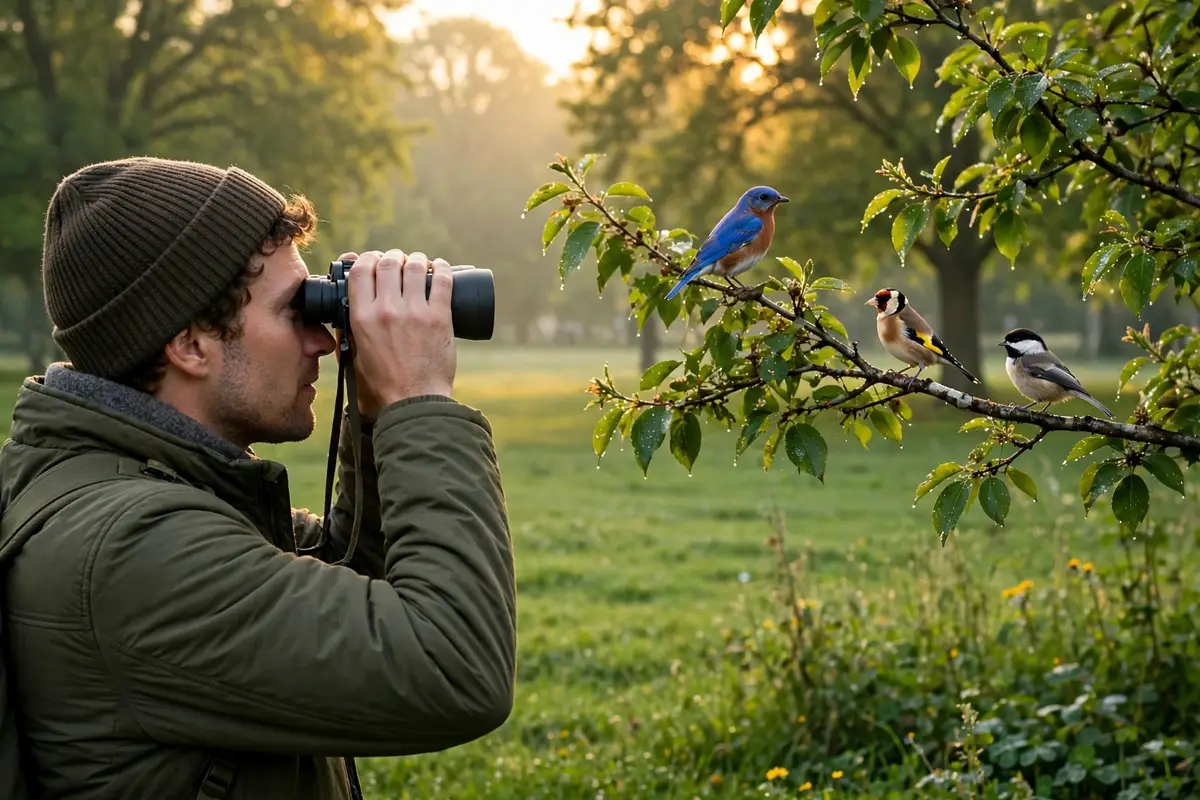
You do not need a forest, a reserve or expensive optics to become a birdwatcher. You need a window, a walk you already take, and the willingness to look up. Learning how to start birdwatching is really about learning to notice: the dawn chorus you have heard for years suddenly separates into individual voices, and the park you cross every day turns out to be hosting dozens of species. This beginner’s guide covers the simple gear that helps, how to identify what you see, and the habits that turn casual glances into a lifelong hobby.
Start Where You Already Are
The biggest beginner mistake is waiting for the perfect trip. Begin with the birds that already share your neighbourhood: the ones on fences, lawns, rooftops and feeders. Sit with a coffee for fifteen minutes and simply watch what arrives. Note the size, the colours, the shape of the beak and how each bird moves — hopping, walking, flitting, soaring. Behaviour is often a better clue than plumage, especially in poor light.
People who work outdoors build this awareness professionally; the opportunities described in our guide to outdoor education employment depend on exactly this habit of close observation. Birdwatching trains it for free, one morning at a time, wherever you happen to live.
Timing helps more than location. Birds are most active in the first hours after dawn, when they sing to claim territory and feed hungrily after the night. A short early walk will show you more than a long midday one in the same place. Evenings have their own rewards — swallows and swifts hunting insects, owls beginning to call — and different seasons transform the cast completely, as migrants arrive and depart. Your local patch, visited at different hours and months, stays interesting all year precisely because it never quite repeats itself. If you have a garden or balcony, a feeder and a shallow water dish will bring the watching to you; many beginners log their first twenty species without leaving home.
Simple Gear for How to Start Birdwatching
You can start with nothing but your eyes, but a modest pair of binoculars transforms the hobby. Choose a general-purpose pair — 8×42 is the classic beginner specification — that feels comfortable to hold and carry. Add a field guide or a reputable bird identification app for your region, and a small notebook. That is genuinely all you need for the first year.
Resist buying specialist clothing and hides. Comfortable shoes, weather-appropriate layers and patience matter far more. The outdoors skills taught in courses like the NH hunter education course — moving quietly, reading terrain, respecting wildlife and habitat — apply directly to watching birds without disturbing them.
Sound deserves its own mention. Many birds are heard long before they are seen, and some secretive species are almost only ever heard. Free apps can now record a soundscape and suggest likely species, which turns a puzzling call into an identification within seconds. Use them as a tutor rather than a crutch: listen first, guess, then check. Within a few months you will recognise your regulars by voice alone, and a walk becomes richer even when the branches look empty.
Learn to Identify Birds Step by Step
Identification feels overwhelming until you break it into a routine. Work through five questions: How big is it, compared to a sparrow, a pigeon or a crow? What is the beak shaped for — cracking seeds, probing mud, tearing food? What colours and markings stand out, especially on the head, wings and tail? What is it doing — swimming, climbing a trunk, hovering, feeding on the ground? And what sound is it making? Answer even three of the five and your field guide or app will usually narrow the field to one or two candidates.
Treat learning birds like learning anything else: a few species at a time, revisited often. The spaced, practical approach in our study tips for students works just as well for the fifty common species near your home as it does for an exam. Master your local regulars first; rarities become exciting later precisely because you know the everyday birds so well.
Keep a List and a Notebook
Birdwatchers keep lists — of the day, the garden, the year, a lifetime — because lists turn watching into a gentle game against yourself. Record date, place, species and one line of behaviour for each outing. You will start to see patterns: which migrants return in which month, which tree the woodpecker favours, how the dawn chorus changes with the seasons.
A notebook also slows you down in the best way. Sketching a bird, however badly, forces you to notice the details that separate one species from another. And unlike screen-based hobbies — our article on whether video games are good for the brain covers their real benefits fairly — birdwatching rewards you with fresh air, walking and attention restored, all at once.
Be a Welcome Guest in the Birds’ World
Good birdwatching is quiet birdwatching. Keep a respectful distance, never chase a bird for a better view, and be especially careful around nests in breeding season. On shared paths, a pair of binoculars raised slowly alarms nobody; sudden movement alarms everything. If you put out feeders, clean them regularly and keep cats indoors or belled where local guidance recommends it.
Finally, connect your new hobby to the bigger picture. Noticing which birds thrive and which disappear is often people’s first real understanding of how local environments change — the same awareness that grows when you learn how recycling works and what happens to the landscapes we share. Start tomorrow morning: one window, one walk, fifteen minutes of looking up. The birds were always there. Now you will see them.