
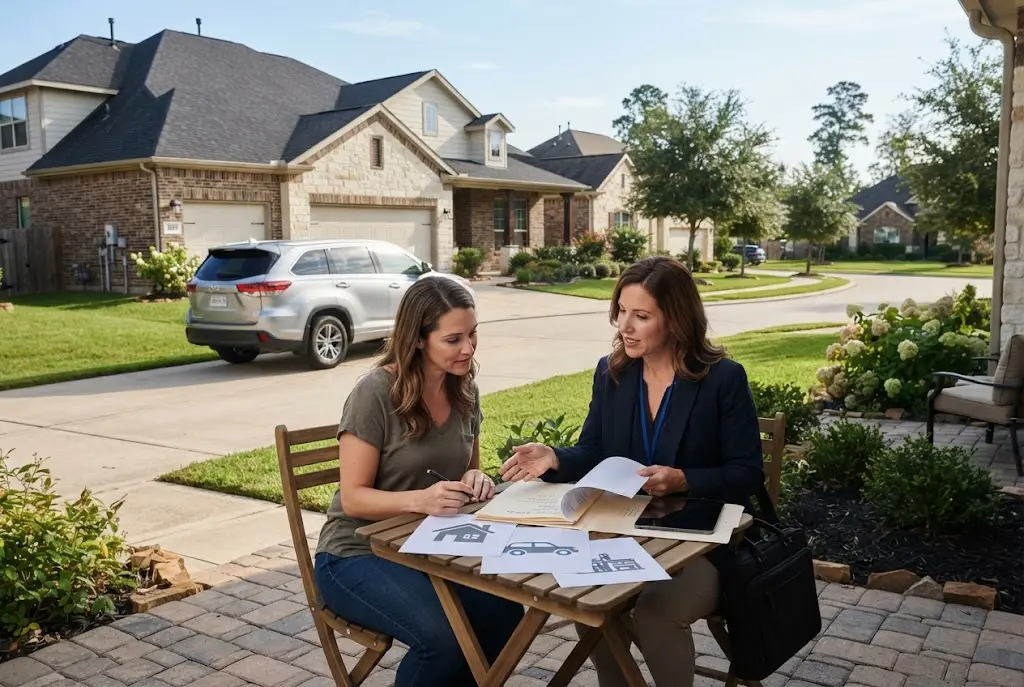
New Caney is part of Montgomery County in Southeast Texas, where homeowners and businesses can encounter storm-related property damage, vehicle accidents, water-related losses, and other unexpected events. Local insurance agencies serve the community with options that can include home, auto, flood, commercial, renters, recreational vehicle, and liability coverage.
What Does New Caney Insurance Cover?
The phrase “New Caney insurance” can refer to several different types of coverage rather than one specific insurance product. The right combination depends on what you own, how you use it, and which risks you want to transfer to an insurer.
Common insurance categories available to New Caney residents and businesses include:
- Homeowners insurance: Protection for eligible property damage, personal belongings, liability, and other covered losses.
- Renters insurance: Coverage designed for tenants and their personal belongings, along with applicable liability protection.
- Auto insurance: Coverage options for personal vehicles and, depending on the policy, other driving risks.
- Flood insurance: Separate protection for qualifying flood-related losses that are generally excluded from standard homeowners policies.
- Commercial insurance: Coverage designed around businesses, property, vehicles, liability, and other commercial exposures.
- Umbrella insurance: Additional liability protection that can supplement underlying policies.
- Recreational insurance: Coverage for eligible boats, motorcycles, RVs, and other recreational assets.
Homeowners Insurance in New Caney
For homeowners, insurance is designed to help protect one of the household’s most valuable assets. A homeowners policy may address covered damage to the dwelling, personal property, liability claims, and additional living expenses when applicable.
Coverage varies by policy, so homeowners should not assume that every type of damage is automatically included. The policy declarations, endorsements, exclusions, deductibles, and coverage limits determine how protection applies.
When comparing New Caney homeowners insurance, consider the home’s replacement cost, roof age and condition, construction characteristics, deductible structure, personal-property limits, liability coverage, and any endorsements that may be appropriate.
Why Flood Insurance Deserves Special Attention
Flood coverage is particularly important to understand because standard homeowners insurance generally does not cover flood damage. A separate flood policy may be available through the National Flood Insurance Program or a private insurer.
Flood risk can vary substantially from one property to another. FEMA flood maps are therefore an important resource when evaluating a particular address. Mortgage requirements can also affect whether a lender requires flood insurance for a property located in a designated high-risk area.
Local insurance information for New Caney also specifically identifies flood insurance as a separate coverage option. Homeowners should evaluate flood exposure rather than assuming that a standard home policy provides sufficient protection.
Before purchasing a property, buyers can also review the applicable FEMA flood map and ask an insurance professional for a property-specific flood quote.
Auto Insurance for New Caney Drivers
Auto insurance protects drivers against different financial risks associated with vehicle ownership and operation. Depending on the policy, coverage can address liability, damage to the insured vehicle, injuries, uninsured or underinsured motorists, and other covered situations.
Premiums can vary based on factors such as driving history, vehicle type, location, coverage limits, deductible choices, and other underwriting considerations.
When comparing auto insurance in New Caney, look beyond the monthly premium. A lower quote can have different limits or deductibles than another policy, making it important to compare equivalent coverage before deciding.
Renters Insurance for New Caney Residents
Renters may not own the building they live in, but they can still face significant financial losses if belongings are damaged, stolen, or destroyed by a covered event.
Renters insurance can provide protection for eligible personal property and may include liability coverage. Tenants should also understand that a landlord’s property insurance generally protects the building owner’s interests rather than replacing the tenant’s personal belongings.
Before purchasing renters insurance, create an inventory of valuable possessions and consider whether the selected personal-property and liability limits are appropriate.
Business Insurance in New Caney
Local businesses can face risks that personal insurance policies are not designed to cover. Commercial insurance can be structured around the type of business, employees, vehicles, property, contracts, equipment, and potential liability exposures involved.
Common commercial coverage areas may include general liability, commercial auto, workers’ compensation-related protection, commercial property, bonds, and other specialized policies.
A business owner should discuss the actual operations of the company with an insurance professional rather than purchasing coverage based solely on the name of the policy. A contractor, retailer, restaurant, professional service company, and transportation business can have very different insurance requirements.
How to Compare New Caney Insurance Quotes
Comparing quotes can be useful, but price should not be the only consideration. Start by identifying the coverage you actually need and then compare policies with similar limits and deductibles.
- Identify your risks: Consider your home, vehicles, belongings, business activities, and potential liability.
- Determine appropriate limits: Avoid choosing limits solely because they produce the lowest premium.
- Compare deductibles: A higher deductible can change the premium but also increases your potential out-of-pocket cost after a covered loss.
- Review exclusions: Understand which risks are specifically excluded.
- Ask about endorsements: Additional coverage may be available for certain property or risk characteristics.
- Compare multiple carriers: Different insurers can price the same risk differently.
- Review the final policy: Make sure the issued policy matches the coverage discussed during the quote process.
Working With a Local Insurance Agency
A local agency can be useful when you want help comparing multiple insurance products or understanding how coverage applies to a particular property or vehicle.
For example, New Caney Insurance Agency says it has served residents in the Porter and New Caney area since 1979 and offers auto, home, commercial, and flood insurance options. Its current information also identifies homeowners, commercial auto, general liability, workers’ compensation, and other insurance categories.
Other agencies also operate in the New Caney market. The B.I.G. Insurance Agency, for example, lists a New Caney office and offers home, auto, business, and life insurance. TriStar Insurance Group lists home, auto, flood, umbrella, renters, life, motorcycle, boat, and other insurance products for the local market.
When contacting an agency, ask which carriers it represents, what coverage options are available, how deductibles work, and whether the quote includes all requested endorsements.
Questions to Ask Before Buying a Policy
- What exactly is covered by this policy?
- Which exclusions are most important for my property?
- What deductible would apply to a major claim?
- Do I need separate flood insurance?
- Are there coverage limits for valuable personal belongings?
- What liability limits are available?
- Are there discounts for bundling policies or qualifying property features?
- How do I report a claim?
- What documentation should I keep for my belongings and property?
- Can the policy be reviewed again at renewal?
New Caney Insurance and Financial Protection
Insurance is ultimately a financial-risk management tool. Instead of attempting to absorb the full cost of every unexpected event, a policy transfers specified risks to an insurer in exchange for a premium, subject to the policy’s terms and conditions.
The most appropriate coverage depends on the individual situation. A homeowner may prioritize dwelling and liability protection, while a renter may focus on personal property and liability. A driver may need specific auto limits, while a business owner may require several commercial policies.
That is why comparing coverage details is generally more useful than choosing a policy based only on a brand name or advertised price.
Frequently Asked Questions About New Caney Insurance
What types of insurance are available in New Caney?
Residents can find several types of insurance, including homeowners, renters, auto, flood, umbrella, recreational, life, and other personal coverage. Businesses can also obtain commercial insurance tailored to their operations.
Is flood insurance included with homeowners insurance?
Standard homeowners policies generally exclude flood damage. A separate flood insurance policy may be necessary depending on the property and desired protection.
How can I find affordable New Caney insurance?
Compare multiple quotes using similar coverage limits and deductibles. Ask about available discounts, but also review exclusions and out-of-pocket costs so that price comparisons are meaningful.
Should I use a local insurance agency?
A local agency can provide assistance with comparing available products and explaining coverage options. However, consumers should still review the actual policy documents before purchasing.
Does location affect insurance pricing?
Yes. Insurance pricing can consider location along with property characteristics, claims history, coverage limits, deductibles, vehicle information, and other underwriting factors.
Final Thoughts
Choosing New Caney insurance is about matching coverage with the risks you actually face. Homeowners, renters, drivers, families, and businesses each have different priorities, and flood protection deserves separate attention because it is generally not included in standard homeowners coverage.
Start by identifying your assets and potential liabilities, then compare policies using equivalent limits and deductibles. Reviewing exclusions and asking specific questions can help you understand what you’re actually purchasing before a loss occurs.
For additional insurance information, you can also explore this guide to A&C Insurance Agency, the guide to ProGuard oil tank insurance, and the Olympus Insurance Company rating guide.
For official flood-map information, homeowners can also review the FEMA Flood Map Service Center for the specific property.