
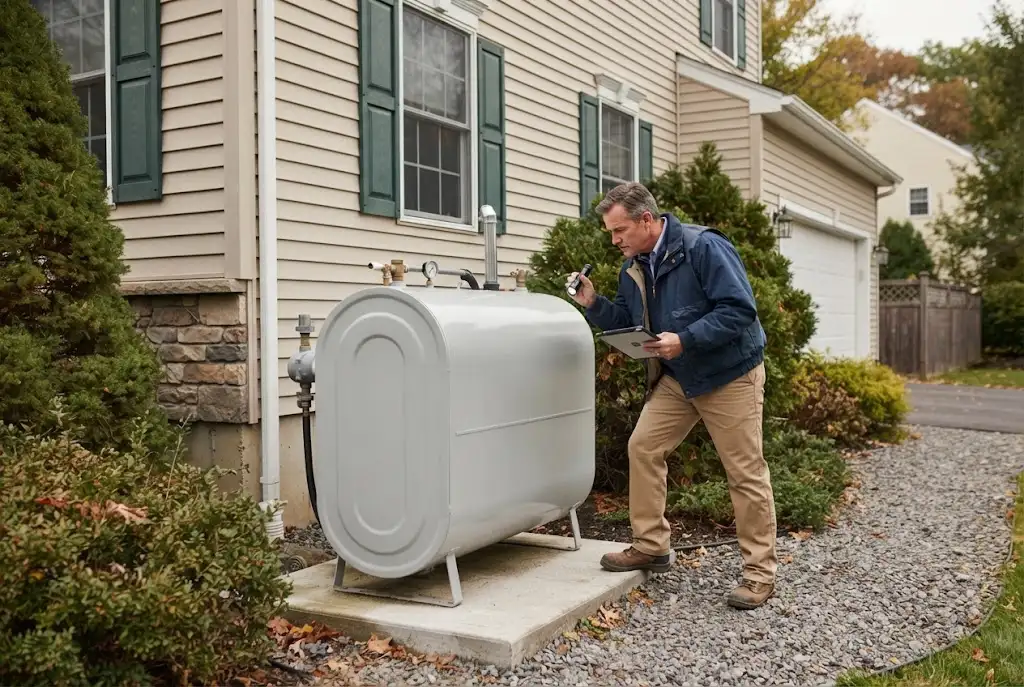
ProGuard oil tank insurance is commonly used to describe ProGuard’s specialized oil tank protection plans. These plans are designed around risks that may not be fully addressed by a standard homeowners policy, including oil tank failure, contamination cleanup, tank removal, and certain third-party liabilities. The exact protection available depends on the plan, eligibility requirements, terms, exclusions, and location.
What Is ProGuard Oil Tank Coverage?
ProGuard provides specialized protection plans for both aboveground and underground oil tanks. Its current coverage information describes separate plans for these two types of tanks, with different coverage limits and covered services.
The company’s current plan information lists up to $50,000 in coverage for an aboveground oil tank and up to $100,000 for an underground oil tank. The described benefits can include tank removal, oil disposal, contamination treatment, soil testing, backfill, labor, and third-party liability, depending on the applicable plan and its terms.
For current plan details, eligibility requirements, and available coverage, review the official ProGuard coverage information before making a purchasing decision.
Why Oil Tank Protection Matters
An oil tank can create several different types of financial exposure. A leak may damage the property itself, require environmental testing, contaminate soil, or affect neighboring property or groundwater. The potential problem is therefore not limited to the cost of replacing a tank.
Standard homeowners insurance should not automatically be assumed to provide comprehensive protection for oil tank failures or environmental contamination. Coverage depends on the specific policy language, endorsements, exclusions, and applicable state requirements.
For example, New Jersey’s Department of Banking and Insurance explains that homeowners insurers can handle oil-tank pollution liability in different ways, including exclusions, optional pollution-liability coverage, and various limits or first-party remediation arrangements. This illustrates why homeowners should review their own policy rather than assume that every oil tank is covered in the same way.
Aboveground Oil Tank Coverage
Aboveground tanks are exposed to weather, corrosion, physical damage, and other conditions that can contribute to failure. ProGuard’s current aboveground plan describes protection of up to $50,000 toward covered oil tank failure, including contamination cleanup and other eligible expenses.
The plan information also describes tank repair and replacement assistance, remediation and cleanup, and associated labor costs. ProGuard states that an aboveground tank must meet its eligibility requirements and must not already be leaking when coverage is purchased.
That eligibility requirement is important. Specialty coverage is intended to address eligible future risks rather than provide automatic reimbursement for a problem that already exists.
Underground Oil Tank Coverage
Underground tanks can present a different risk because a developing leak may be difficult to notice. Oil can migrate through soil and potentially affect groundwater or neighboring property, making environmental remediation an important consideration.
ProGuard’s current underground oil tank plan provides up to $100,000 in stated coverage and describes benefits such as tank removal and disposal, contamination treatment, soil testing, backfill, labor, and third-party liability coverage. The plan also includes a voluntary tank removal option under its stated terms.
Because underground tank requirements can differ by location, homeowners should verify the applicable eligibility requirements, testing requirements, exclusions, and coverage limits before enrolling.
What Can Oil Tank Coverage Help With?
Specialized oil tank protection can address several expenses associated with an eligible tank failure. Depending on the plan, these may include:
- Oil tank removal
- Tank disposal
- Oil disposal
- Tank repair or replacement
- Soil testing
- Environmental cleanup
- Contamination remediation
- Soil backfill after excavation
- Associated labor
- Certain third-party liability costs
These benefits should not be interpreted as universal coverage. The applicable agreement determines what is covered, the maximum payable amount, eligibility conditions, exclusions, and other limitations.
ProGuard Oil Tank Insurance vs. Standard Homeowners Insurance
One of the most important distinctions is that specialized oil tank protection should not be treated as identical to a standard homeowners insurance policy.
Homeowners insurance can provide broad protection for covered property and liability risks, but oil tank leaks and environmental contamination can fall under specific exclusions or limitations. The treatment varies by insurer, policy wording, state, and available endorsements.
ProGuard specifically focuses on oil tank and septic system protection. Its current materials state that its oil tank plans are intended to address tank failure and environmental cleanup risks that may otherwise create a coverage gap.
For homeowners comparing options, the best approach is to read the actual homeowners policy together with any proposed oil tank protection agreement. This makes it easier to identify overlapping protection and potential gaps.
Understanding Coverage Limits
A coverage limit is the maximum amount a plan may pay for an eligible covered loss or category of loss. ProGuard currently describes different limits for aboveground and underground oil tank plans.
Aboveground coverage is advertised at up to $50,000, while underground coverage is advertised at up to $100,000. These figures should not be interpreted as guaranteed payments for every claim. Actual benefits depend on the specific contract, eligibility, covered event, exclusions, and applicable conditions.
When evaluating a plan, consider whether the stated limit would be meaningful for the type of property and environmental risk involved in your location.
Why Environmental Cleanup Is Important
The financial consequences of an oil leak can extend beyond repairing or replacing the tank. Contaminated soil may require testing, excavation, treatment, disposal, and restoration. If contamination spreads beyond the property, additional liability issues can arise.
This is one reason specialized oil tank protection can be different from a simple equipment-repair agreement. ProGuard’s current underground plan specifically describes contamination treatment, soil testing, backfill, and third-party liability protection among its covered areas.
Eligibility and Existing Leaks
Before purchasing coverage, homeowners should determine whether their tank meets the provider’s eligibility requirements. ProGuard’s current information states that an aboveground tank must be in good condition and not leaking when the protection plan is purchased. Underground coverage also has stated enrollment requirements, including a soil test from an approved laboratory.
These requirements reinforce an important insurance principle: coverage should be arranged before a known loss occurs. If a tank is already leaking or environmental contamination already exists, a new protection plan should not be assumed to cover that existing condition.
How to Evaluate an Oil Tank Protection Plan
Before selecting a plan, review the details rather than focusing only on the advertised maximum benefit. Consider the following:
- Whether your tank is aboveground or underground
- Whether your tank meets the provider’s eligibility requirements
- The maximum coverage amount
- Tank removal and replacement provisions
- Environmental remediation coverage
- Soil testing requirements
- Third-party liability provisions
- Exclusions and limitations
- Coverage duration
- Transferability provisions
- Applicable state and local requirements
It is also useful to compare specialty protection with any oil-tank endorsement already available through your homeowners insurer. Different arrangements can provide different combinations of first-party and liability protection.
Oil Tank Insurance and Homeowners Selling a Property
Oil tanks can become particularly important when buying or selling a home. Buyers may want information about the tank’s condition, location, testing history, and potential environmental exposure. Sellers may also need to understand whether an existing protection plan can transfer to a new owner.
ProGuard’s current materials state that its underground oil tank protection can be transferable to a new owner under the applicable plan terms. Homeowners should verify the specific transfer conditions before relying on this feature during a property transaction.
For broader insurance considerations, NatureUpdate also covers insurance agencies and general coverage decisions, providing useful context for evaluating property-related protection.
How to Reduce Oil Tank Risk
Insurance or specialty protection is only one part of managing oil tank risk. Property owners can also take practical steps to identify potential problems early.
- Have the tank inspected when appropriate.
- Pay attention to visible corrosion or damage.
- Monitor the area around the tank for unusual signs of leakage.
- Keep documentation related to tank installation and maintenance.
- Understand local environmental and property requirements.
- Ask the heating-oil provider about available maintenance services.
- Review insurance and specialty protection before a problem develops.
Early identification can help property owners address maintenance concerns before they become larger problems.
Frequently Asked Questions
Does homeowners insurance cover oil tank leaks?
Not necessarily. Coverage depends on the policy, exclusions, endorsements, insurer, and location. Oil contamination and tank failure can be excluded or limited, so homeowners should review their actual policy.
How much oil tank coverage does ProGuard provide?
ProGuard currently advertises up to $50,000 for its aboveground oil tank plan and up to $100,000 for its underground oil tank plan. Actual coverage depends on the applicable plan and its terms.
Does ProGuard cover environmental cleanup?
Yes, ProGuard’s current oil tank coverage materials describe environmental cleanup and contamination-related services as part of its plans, subject to the applicable terms, limits, and eligibility requirements.
Can an existing oil leak be covered by a new plan?
A new protection plan should not be assumed to cover a known existing leak. ProGuard’s current information includes eligibility requirements concerning tank condition at enrollment.
Are underground oil tanks more complicated to insure?
They can involve additional environmental considerations because leaks may remain hidden and can potentially affect soil, groundwater, or neighboring property. Coverage requirements also vary by provider and jurisdiction.
Should I compare ProGuard with my homeowners insurance?
Yes. Reviewing both can help identify what is already covered, what is excluded, and whether a specialized oil tank protection plan addresses risks that your existing policy does not.
Final Takeaway
ProGuard oil tank protection is designed around a specific property risk that can involve tank failure, oil leaks, environmental cleanup, and third-party liability. Current ProGuard materials distinguish between aboveground and underground plans, with different coverage limits and requirements.
The most important step is to understand the actual agreement before purchasing coverage. Review eligibility requirements, limits, exclusions, environmental protection, liability provisions, and transfer conditions, and compare them with your existing homeowners policy. That approach can help you understand where your protection begins, where it ends, and which oil tank risks require additional planning.