
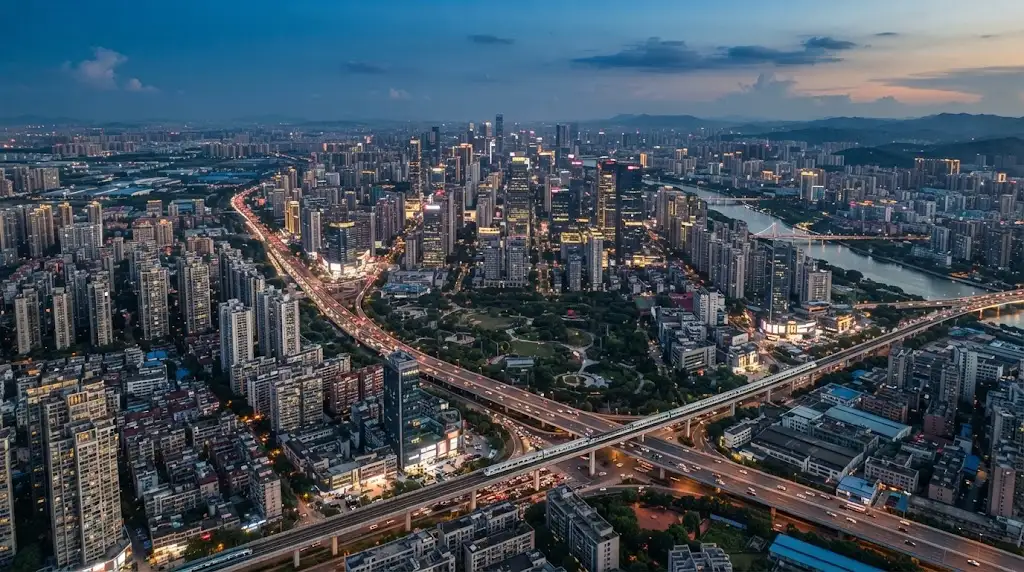
Megacities are among the most complex urban environments in the world. They bring together millions of residents, businesses, transportation networks, housing systems, cultural communities, and public services within enormous metropolitan areas. But what actually makes a city a megacity, why do these urban areas continue to grow, and what challenges come with their scale?
This guide explains everything you need to know about megacities, including their defining characteristics, economic importance, infrastructure needs, environmental pressures, social challenges, and future development. For readers interested in how large urban areas function, related topics such as safer roads in metropolitan cities provide a useful look at one specific part of the wider urban picture.
What Is a Megacity?
A megacity is generally understood as an urban area with a population of at least 10 million people. The term focuses on the enormous scale of an urban population rather than simply the administrative boundaries of a particular municipality.
This distinction matters because a large metropolitan area can extend well beyond the boundaries of its central city. Residential communities, business districts, industrial areas, suburbs, transport corridors, and surrounding municipalities can function as part of one interconnected urban system.
The United Nations uses the 10-million threshold when referring to megacities. Its 2025 urbanization data recorded 33 megacities worldwide, compared with only eight in 1975.
How Megacities Differ From Ordinary Cities
Population size is the clearest defining characteristic, but a megacity is more than simply a very large population. Scale changes almost every aspect of urban life.
- Population density: Large numbers of people live and work within connected urban areas.
- Economic concentration: Major employers, financial institutions, industries, and service businesses can cluster within the metropolitan economy.
- Transportation demand: Millions of daily journeys create substantial demand for roads, rail, buses, airports, and other transport systems.
- Infrastructure complexity: Water, electricity, waste management, communications, housing, and public services must operate across a huge area.
- Cultural diversity: Large metropolitan areas often bring together people from different regions, countries, languages, and cultural backgrounds.
- Environmental pressure: The concentration of people and economic activity can create significant demands on land, energy, water, and other resources.
Why Do Megacities Continue to Grow?
Urban growth is driven by several factors rather than one single cause. Employment opportunities are a major attraction because large cities often contain diverse labor markets and business ecosystems.
Education, healthcare, transportation, entertainment, technology, and access to specialized services can also encourage people to move toward major metropolitan areas. Businesses may follow the same pattern because large populations provide substantial customer and labor markets.
At the same time, urban growth does not always happen evenly. Some parts of a metropolitan area may experience rapid development while other neighborhoods struggle with housing shortages, infrastructure limitations, or inadequate access to services.
The Economic Importance of Megacities
Megacities can act as major economic engines. Their size allows different industries, workers, investors, institutions, and consumers to interact within a relatively connected metropolitan economy.
Business districts may contain financial services, technology companies, professional firms, retailers, manufacturers, logistics operators, and creative industries. The concentration of talent and customers can create opportunities for innovation and entrepreneurship.
Large cities can also support extensive supply chains. Ports, airports, highways, rail networks, warehouses, and distribution centers connect metropolitan economies with national and international markets.
This economic concentration is one reason urban planning has become increasingly important. Growth needs to be supported by transportation, housing, utilities, digital infrastructure, and public services rather than simply allowing the physical footprint of a city to expand without coordination.
Transportation in Megacities
Transportation is one of the defining challenges of a megacity. When millions of people need to travel for work, education, shopping, healthcare, and recreation, even small weaknesses in a transport network can affect a large number of residents.
Successful metropolitan transportation systems typically require multiple options rather than relying on a single mode. Roads, buses, rail systems, walking routes, cycling infrastructure, and other forms of mobility can serve different needs.
The relationship between transportation and everyday vehicle ownership is also important. Our guide to city versus highway driving explores how different driving environments can affect vehicle use and maintenance needs.
Road design also has a direct relationship with urban safety. For a deeper look at this issue, readers can explore how metropolitan cities can approach road safety.
Housing and Urban Density
Housing becomes a major issue as metropolitan populations expand. A growing population needs homes in locations that are reasonably connected to employment, education, healthcare, transportation, and other services.
High-density housing can help accommodate more residents without expanding the urban footprint indefinitely. Apartments and mixed-use developments can place homes closer to shops, workplaces, public transportation, and community facilities.
However, density alone does not solve housing problems. Successful urban development also depends on affordability, infrastructure capacity, neighborhood design, access to public services, and the quality of the surrounding environment.
Environmental Challenges of Megacities
Large concentrations of people and economic activity can place considerable pressure on the environment. Energy consumption, transportation emissions, waste generation, construction, water demand, and land use all become significant planning considerations.
Urban expansion can also affect natural areas surrounding metropolitan regions. When development spreads outward, agricultural land, habitats, wetlands, and other open spaces may come under pressure.
Well-designed urban planning can help reduce some of these pressures by encouraging efficient land use, public transportation, green spaces, energy efficiency, better waste management, and development patterns that reduce unnecessary travel.
Climate and Resilience in Large Cities
Megacities also have to consider resilience. Large populations and valuable infrastructure can make the consequences of extreme weather, flooding, heat, storms, or other hazards particularly significant.
Resilience planning can involve stronger infrastructure, emergency preparedness, reliable public services, better drainage, heat-management strategies, accessible transportation, and protection of vulnerable communities.
The goal is not simply to respond after a disruption occurs. A resilient metropolitan area considers potential risks during the planning and design of infrastructure, housing, transportation, and public spaces.
Culture and Lifestyle in Megacities
One of the most appealing characteristics of major cities is their cultural variety. Large metropolitan areas can bring together restaurants, museums, theaters, festivals, sports venues, parks, historic neighborhoods, shopping districts, and communities representing many different cultures.
This diversity is also reflected in the range of destinations and experiences available within major American cities. For example, readers exploring urban destinations can discover the lifestyle and attractions of Milwaukee, consider places to experience in Atlanta, or explore Los Angeles for culture, nature, and entertainment.
Urban travel can also reveal how different metropolitan areas balance dense development with cultural and recreational spaces. Guides covering the San Francisco Bay Area, Washington, DC, and San Diego offer examples of different city environments.
Technology and the Future of Megacities
Technology is increasingly connected with urban management. Digital systems can help cities monitor transportation, manage public services, communicate with residents, and analyze infrastructure needs.
Smart-city technology may include connected traffic systems, digital public services, sensors, data platforms, energy-management systems, and tools for monitoring environmental conditions.
Technology, however, is not a substitute for effective planning. A sophisticated digital system cannot solve a housing shortage, transportation gap, or infrastructure problem on its own. Technology works best when it supports clear public goals and practical urban policies.
Why Urban Planning Matters
Megacities require long-term planning because decisions made today can shape urban life for decades. Roads, rail networks, housing developments, utilities, parks, commercial districts, and public facilities all influence how people move through and experience a metropolitan area.
Good planning also requires coordination between different parts of a metropolitan region. A transportation problem in one municipality can affect workers and businesses elsewhere. Likewise, housing, environmental protection, and infrastructure decisions can have consequences far beyond a single neighborhood.
For people interested in how different cities function as destinations, NatureUpdate also covers urban travel topics such as Texas destinations, places near Kansas City, and the Bay Area.
What Are the Biggest Challenges Facing Megacities?
The challenges vary from one metropolitan area to another, but several themes appear repeatedly:
- Housing affordability: Rapid demand can put pressure on housing supply and prices.
- Traffic and mobility: Large populations can create heavy demand for transportation infrastructure.
- Infrastructure capacity: Utilities and public services must keep pace with population and development.
- Environmental pressure: Urban activity can affect air quality, water, land, waste, and energy use.
- Inequality: Economic opportunities may coexist with significant differences in income and access to services.
- Climate resilience: Large populations and infrastructure networks can be vulnerable to environmental hazards.
- Governance: Metropolitan regions often require cooperation across multiple jurisdictions.
Are Megacities Always Better Places to Live?
Not necessarily. A megacity can offer extensive employment opportunities, cultural experiences, education, healthcare, transportation, and entertainment, but it can also bring congestion, high housing costs, noise, pollution, and long travel distances.
The quality of life in a large metropolitan area depends heavily on how effectively growth is managed. Two cities with similar population sizes can provide very different experiences because of differences in housing, infrastructure, public transportation, environmental management, governance, and access to services.
What Does the Future Hold for Megacities?
Megacities are likely to remain important parts of global urban development. The United Nations’ 2025 World Urbanization Prospects reports that the number of megacities increased from eight in 1975 to 33 in 2025 and projects 37 by 2050.
At the same time, the future of urbanization is not only about megacities. The majority of cities worldwide remain much smaller, and small and medium-sized cities will continue to play an important role in population growth and economic development.
This means the future urban landscape will include a mixture of megacities, large metropolitan areas, medium-sized cities, smaller cities, and towns. Each will need approaches suited to its population, geography, economy, infrastructure, and environmental conditions.
Frequently Asked Questions About Megacities
What qualifies a city as a megacity?
A megacity is generally defined as an urban area with 10 million or more inhabitants. The exact way an urban area is measured can vary depending on the geographic and statistical definition being used.
How many megacities are there?
According to the United Nations’ 2025 World Urbanization Prospects, there were 33 megacities with at least 10 million inhabitants in 2025.
What is the difference between a megacity and a metropolitan area?
A metropolitan area can include a central city and surrounding communities that are economically and socially connected to it. A megacity refers specifically to an urban area meeting the 10-million population threshold.
Why are megacities important?
Megacities can concentrate economic activity, employment, innovation, transportation networks, cultural institutions, and specialized services. Their size also makes them important centers for regional and national development.
What are the main problems in megacities?
Common challenges include housing pressure, congestion, infrastructure demands, pollution, inequality, environmental risks, and the difficulty of coordinating development across large metropolitan regions.
Will the number of megacities continue to increase?
Current United Nations projections indicate that the number of megacities is expected to increase, although urban growth will also occur across thousands of smaller cities and towns.
Conclusion
Megacities represent one of the most visible forms of modern urbanization. Their enormous populations create economic and cultural opportunities, but they also require careful management of housing, transportation, infrastructure, environmental resources, and public services.
Understanding megacities means looking beyond population numbers. The real question is how effectively a metropolitan area can support the people who live and work there while remaining accessible, resilient, sustainable, and economically productive.
From transportation and road safety to cultural destinations and urban development, the wider city environment shapes everyday life. Exploring individual city guides alongside broader urban topics can provide a clearer picture of how different metropolitan areas work.