
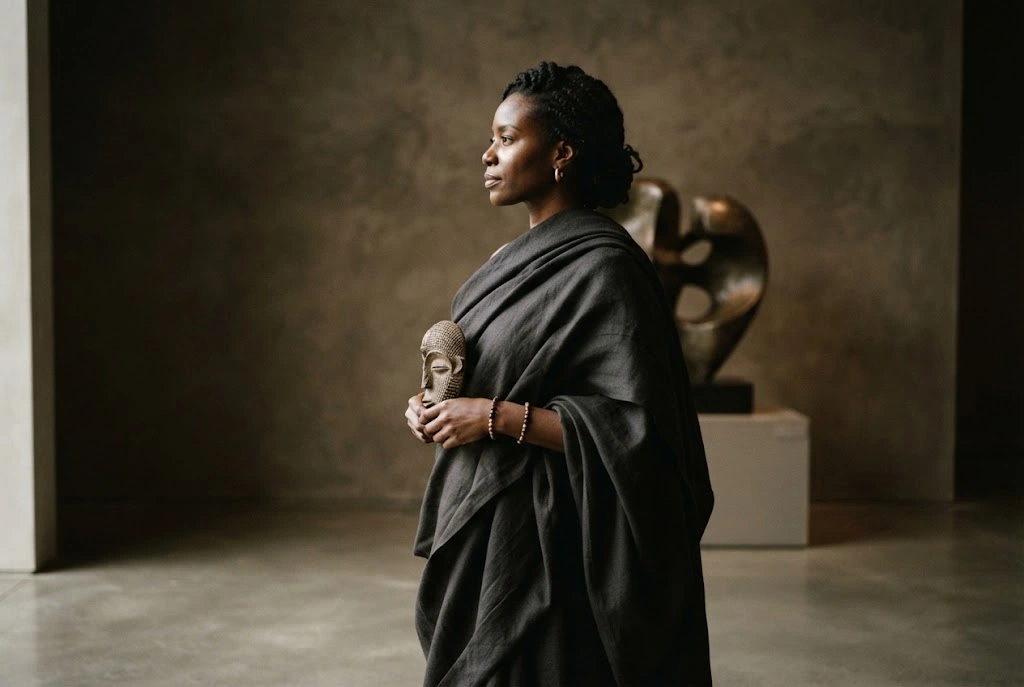
When approached thoughtfully, the nude can become a powerful artistic language through which artists explore identity, dignity, beauty, history, and the relationship between the individual and society.
The Nude as an Artistic Tradition
The human body has been a subject of artistic exploration for thousands of years. Artists have used the nude to study anatomy, movement, proportion, emotion, identity, and ideals of beauty.
However, the artistic nude is never completely separate from culture. Different societies have developed different ideas about modesty, beauty, gender, race, and the meaning of the human body.
That makes representations of Black bodies particularly significant within Western art history, where Black subjects were often viewed through social and political systems that did not give them the same agency or representation afforded to white subjects.
Why Representation Matters
Representation influences how people understand themselves and others. When certain communities are repeatedly portrayed through narrow stereotypes, those images can shape public perceptions over generations.
Black artists and photographers have therefore used the human body as one way of reclaiming visual representation. Rather than allowing other people to define what Black beauty should look like, artists can create their own visual language around individuality, heritage, confidence, and identity.
This shift changes the central question. Instead of asking simply what a Black body looks like, the viewer is encouraged to consider what the artwork is communicating about the person, culture, history, or experience represented.
Moving Beyond Stereotypes
One of the most important aspects of contemporary Black representation is the rejection of simplistic stereotypes.
Historically, Black bodies have sometimes been represented through exoticised or dehumanising imagery. Such representations reduced individuals to physical characteristics rather than presenting them as complete human beings with personalities, histories, emotions, and agency.
Contemporary artists can challenge this tradition by placing greater emphasis on individuality and consent. The subject is not merely an object within the composition; the subject can be an active participant in the creation and meaning of the work.
Black Beauty and the Human Form
Art can provide space for broader definitions of beauty. Skin tone, body shape, age, hair, scars, physical differences, and other characteristics can all become part of an artist’s exploration of human individuality.
Black beauty itself is not a single aesthetic category. The Black diaspora encompasses many cultures, ethnic backgrounds, geographic histories, and traditions, meaning that there is no single appearance that can represent every Black person.
Artistic representations become more meaningful when they allow this diversity to exist rather than attempting to reduce Black identity to one visual formula.
The Importance of the Artist’s Perspective
The identity and perspective of the artist can influence how the human body is presented. A self-portrait, for example, can provide a very different relationship between subject and artist because the individual is simultaneously creating and representing themselves.
Self-representation can provide greater control over the narrative. The artist or subject can determine the setting, expression, composition, lighting, clothing or lack of clothing, and intended emotional meaning.
This control can be particularly important when working with subjects whose bodies have historically been represented by outsiders.
Photography and Black Identity
Photography transformed visual representation by making portraits and documentary images more widely accessible. Black photographers have used the medium to document communities, challenge stereotypes, celebrate personal identity, and create new representations of Black life.
The camera can record physical appearance, but photography can also communicate mood, history, relationships, confidence, vulnerability, and cultural belonging.
In contemporary photography, an unclothed portrait does not automatically have a sexual meaning. Depending on the artist’s intention and presentation, it can instead function as a study of form, identity, vulnerability, ageing, freedom, or personal expression.
Identity and Body Autonomy
Body autonomy is an important part of contemporary discussions about representation. An individual should have meaningful control over how their image and body are represented and distributed.
This principle is especially relevant in photography because digital technology makes images easy to copy, edit, publish, and redistribute.
Respectful artistic practice therefore involves more than producing an aesthetically successful image. It also requires consideration of consent, privacy, context, authorship, and how the finished work will be presented to an audience.
Beauty, Vulnerability and Strength
The nude can communicate vulnerability because removing clothing removes an ordinary layer of social presentation. At the same time, an unclothed subject can appear confident, powerful, self-possessed, or liberated.
These apparently different qualities can exist simultaneously.
An effective artwork does not necessarily tell the viewer exactly what to feel. Instead, it can invite questions about identity and the relationship between the individual and the viewer.
Why Context Changes the Meaning of an Image
The same photograph can communicate different ideas depending on where and how it is displayed.
A portrait presented in a fine-art exhibition may encourage viewers to think about composition, history, identity, or artistic technique. The same image presented without context on a social platform could be interpreted very differently.
Titles, captions, surrounding artwork, exhibition notes, lighting, location, and curatorial decisions can all influence interpretation.
Context is therefore an essential part of understanding artistic representations of Black nudity.
Black Artists and Reclaiming the Visual Narrative
One recurring theme in Black art is the reclamation of narratives that were historically controlled by others. Artists can challenge established visual traditions by deciding how Black people should be seen and understood.
This can involve celebrating everyday beauty, exploring family history, examining race and identity, documenting personal experiences, or questioning conventional ideas about the body.
The result can be a richer visual culture in which Black subjects are represented as individuals rather than simply as symbols of race.
The Role of Museums and Galleries
Museums and galleries play an important role in determining which representations enter the public cultural record. Exhibition choices can introduce audiences to artists and perspectives that may have previously received limited attention.
Curators also influence interpretation by placing individual works within historical and cultural contexts.
Greater representation in galleries does not simply mean adding more images of Black bodies. It also means creating space for Black artists to contribute their own perspectives, histories, questions, and artistic approaches.
Digital Art and Contemporary Culture
Social media and digital publishing have dramatically expanded the ways artists can reach audiences. Artists no longer need to rely entirely on traditional galleries or major institutions to share their work.
This increased accessibility can help underrepresented artists build audiences and control their own visual narratives.
However, digital platforms also create challenges. Algorithms, image moderation, reposting, copyright issues, and the removal of artistic content can affect how audiences encounter visual work.
How to Appreciate Artistic Nudity Responsibly
Viewers can approach artistic nudity with the same critical attention they would bring to other forms of visual culture.
- Consider the artist’s intention: Ask what the artwork is trying to communicate.
- Consider the subject: Think about agency, identity, and representation rather than reducing the person to physical appearance.
- Consider historical context: Understand how race and representation have influenced visual culture.
- Look beyond the body: Examine composition, lighting, expression, texture, setting, and symbolism.
- Respect consent and privacy: Artistic imagery should not be treated as permission to redistribute or misuse someone’s image.
Frequently Asked Questions
Is Black nudity in art inherently sexual?
No. Nudity and sexuality are not automatically synonymous. In fine art and photography, the nude can be used to explore anatomy, identity, vulnerability, beauty, history, self-expression, or cultural representation.
Why is Black representation in art important?
Representation can influence how communities are seen and understood. More diverse representations can challenge stereotypes and provide artists and subjects with greater control over their visual narratives.
Can nude photography be about identity rather than sexuality?
Yes. Artists can use the human form to explore identity, ageing, vulnerability, confidence, culture, personal history, and many other subjects.
Why does the artist’s perspective matter?
The artist’s perspective can influence the meaning, framing, and context of an image. Black artists in particular have used self-representation and portraiture to challenge established stereotypes and create alternative narratives.
How should viewers approach artistic representations of nudity?
Viewers should consider the work’s artistic context, intention, historical background, composition, and treatment of the subject rather than reducing the image to the fact that the subject is unclothed.
What role does consent play in artistic photography?
Consent and respectful treatment are fundamental considerations when creating, publishing, or distributing images involving identifiable people. Digital publication makes these considerations particularly important.
Conclusion
Black nudity in art can be a powerful subject through which artists explore beauty, identity, vulnerability, autonomy, history, and representation. Its meaning depends on context, artistic intention, the relationship between artist and subject, and the way the finished work is presented.
The most meaningful conversations about the Black body in art move beyond appearance. They recognise the person behind the image and consider the cultural history surrounding representation.
When artists have the freedom to represent themselves and their communities on their own terms, visual culture becomes more diverse, more complex, and more capable of reflecting the many ways people understand beauty and identity.